
Related Posts
Online Message
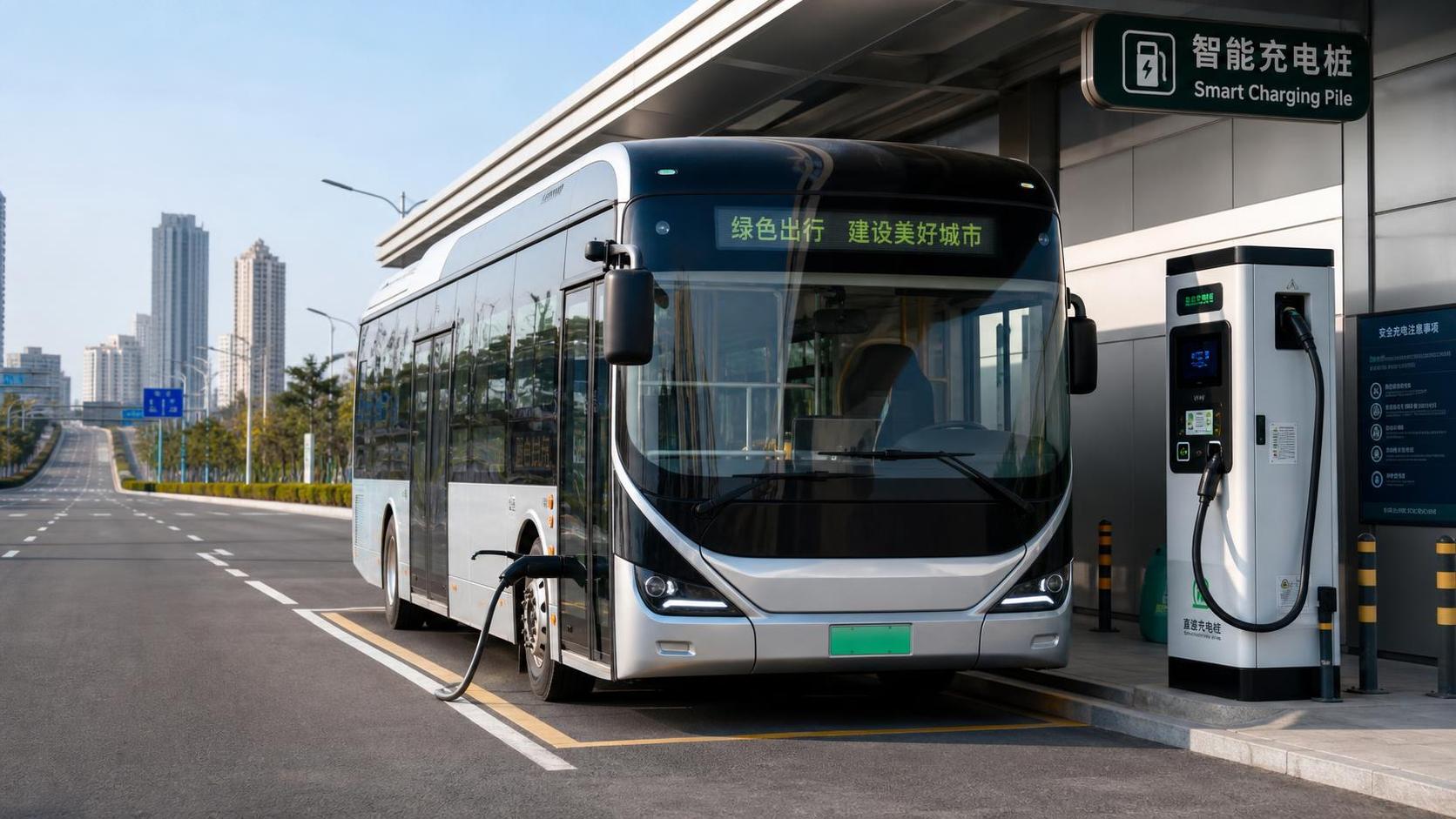
Why are new energy buses getting so much attention?
New energy buses are changing public transport for one simple reason: they combine cleaner operation with better control over long-term operating costs.
That does not mean every electric or zero-emission bus performs the same way. Battery design, charging strategy, climate, topography, and route length all shape results.
In real deployments, the discussion quickly moves beyond tailpipe emissions. People want to know how far the bus can run, how long it takes to charge, and what affects reliability.
That is where the basics matter. Understanding how new energy buses work helps separate useful technical data from marketing language.
It also explains why established road vehicle manufacturers are investing heavily in this segment. FOTON, for example, has built a broad commercial vehicle portfolio and expanded its new energy bus presence across Latin America and other global markets.
The broader shift is not only about electrification. It is also about smarter fleet planning, lower noise, reduced fossil fuel dependence, and more connected vehicle management.
When people say “new energy buses,” what do they usually mean?
Most of the time, new energy buses refer to battery electric buses, plug-in hybrid buses, and sometimes fuel cell buses, depending on the market.
Battery electric buses are the most common reference point today. They run on stored electrical energy and produce zero tailpipe emissions during operation.
Plug-in hybrids still use batteries, but they also rely on an internal combustion engine. They can support transitional use where charging networks are incomplete.
Fuel cell buses use hydrogen to generate electricity onboard. They are part of the wider new energy buses category, though infrastructure needs are usually more complex.
For basic route planning and charging discussions, battery electric models usually set the benchmark. They make the interaction between battery capacity, charging speed, and route demand easiest to evaluate.
A useful way to think about new energy buses is this: they are not just vehicles. They are part of an operating system that includes charging, software, maintenance, and scheduling.
How do battery systems affect daily performance?
Battery performance is the center of most questions about new energy buses, because it directly affects range, charging windows, payload balance, and lifecycle cost.
Capacity matters, but total kilowatt-hours alone do not tell the whole story. Usable energy, battery chemistry, thermal management, and discharge behavior all influence real operating range.
For example, two buses with similar battery sizes may perform differently on the same line. One may handle repeated stop-and-go traffic better because of stronger energy recovery control.
Temperature is another major factor. Cold weather can reduce available energy and increase heating demand, while very hot environments can raise cooling loads and battery stress.
In practical terms, operators often look at a buffer instead of the advertised maximum range. That buffer protects service continuity during traffic delays, detours, or air-conditioning peaks.
Battery health over time is just as important as day-one range. Degradation affects usable capacity gradually, so route planning should account for performance later in the vehicle lifecycle, not only at delivery.
- Check usable battery capacity, not only nominal capacity.
- Review expected range under local temperature conditions.
- Ask how heating and cooling loads change energy use.
- Confirm battery warranty terms and degradation assumptions.
Is slow charging or fast charging better for new energy buses?
There is no universal answer. The better charging method depends on route design, depot space, fleet utilization, and how much idle time is available each day.
Depot charging is common when buses return for overnight charging. It usually supports stable operations with fewer charging events and simpler scheduling.
Opportunity charging works differently. Buses charge during short breaks at terminals or transfer points, often using high-power systems to extend service time.
A fleet with short urban loops may benefit from opportunity charging. A fleet with fixed overnight downtime may prefer depot charging with larger onboard batteries.
The more useful comparison is not “fast versus slow” in isolation. It is whether the charging strategy fits the service pattern without creating bottlenecks.
The table below helps frame that decision in a more practical way.
In many cases, mixed charging is the most realistic answer. It gives flexibility when route demand changes across seasons or service hours.
What makes route planning for new energy buses different?
Traditional bus route planning focuses heavily on passenger demand, travel time, depot access, and driver scheduling. New energy buses keep all of that, then add energy behavior to the equation.
The first issue is route energy intensity. A flat route with moderate traffic may consume far less energy than a shorter route with steep grades and frequent congestion.
Passenger load also matters. Full occupancy, auxiliary systems, and repeated door cycles can raise energy consumption more than many early estimates assume.
That is why route length alone is not enough when evaluating new energy buses. A better metric is energy use per kilometer under local service conditions.
In actual planning, three questions usually determine feasibility:
- Can the bus complete the route with a realistic reserve?
- Does the schedule allow charging without disrupting service?
- Will seasonal changes alter the charging or dispatch plan?
This is where telematics and fleet software become valuable. Better data improves dispatch decisions, charger utilization, maintenance timing, and battery health monitoring.
Manufacturers with wider commercial vehicle experience often bring an advantage here. FOTON’s work across buses, trucks, and connected vehicle systems reflects that broader operational perspective.
What are the most common mistakes when evaluating new energy buses?
One common mistake is focusing only on purchase price. New energy buses should be judged through total lifecycle cost, including energy, maintenance, charging infrastructure, and battery support.
Another mistake is treating catalog range as route range. Laboratory figures are useful for comparison, but road conditions, climate, and service intensity change real outcomes.
Some evaluations also underestimate infrastructure lead time. Grid connection, charger placement, and depot electrical upgrades can influence rollout timing as much as vehicle delivery.
Battery replacement assumptions need careful review as well. The key question is not only whether replacement may be needed, but when, under what duty cycle, and at what residual value.
There is also a service readiness issue. New energy buses work best when technicians, spare parts planning, and software diagnostics are prepared before deployment begins.
A short checklist can help keep the assessment grounded:
- Match battery configuration to actual route duty cycle.
- Test energy assumptions in hot, cold, and peak-load conditions.
- Verify charging compatibility and grid capacity early.
- Review after-sales support, diagnostics, and parts coverage.
How should someone compare options and decide what to study next?
The best next step is to compare new energy buses as complete operating solutions, not as isolated vehicle specifications.
Start with the route. Estimate daily mileage, average speed, grade profile, stop frequency, weather exposure, and available charging windows. That creates a more reliable technical baseline.
Then look at battery chemistry, charging architecture, warranty terms, and data management tools. These factors often explain the difference between acceptable performance and durable performance.
It also helps to examine supplier depth. A manufacturer with global commercial vehicle experience, strong partnerships, and proven fleet deployment history usually offers better long-term confidence.
That is one reason brands such as FOTON receive attention in new energy buses. Scale, platform breadth, and operational experience matter when the goal is dependable zero-emission transport.
In the end, battery sizing, charging strategy, and route planning are not separate topics. They are a connected decision set.
A sensible evaluation process is to define route conditions first, compare charging models second, and test lifecycle assumptions third. That makes it easier to identify realistic options, likely risks, and the data worth validating before any deployment decision.
Please give us a message